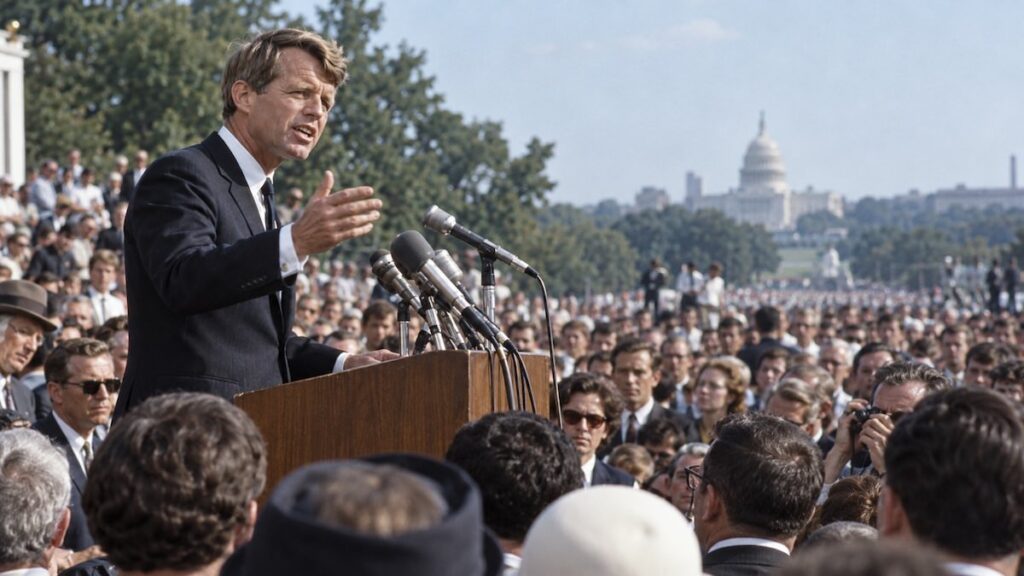
On 4 April 1968, Robert Kennedy, the US senator and presidential candidate, brother of the assassinated President John F. Kennedy, was on his way to a campaign rally in Indianapolis when he learned that Martin Luther King had been assassinated. Within minutes he stood in front of the crowd and told them himself. His speech ran under five minutes and was almost entirely unscripted. Riots broke out in cities across America that night. Indianapolis stayed calm, and Kennedy’s words are widely credited with that.
What makes the speech worth studying isn’t its eloquence. It’s his composure.
He said the hardest thing first and said it plainly. He spoke from his own loss, naming his brother’s killing, rather than speaking down to the crowd. And he held a steady, deliberate pace, with real feeling but no theatrics. The audience could read from his voice and body that he meant what he said.
The moments that test senior leaders rarely come with a script either: a hostile analyst question, a crisis call, a board meeting that turns. Preparation matters, but in that moment people judge whether you are steady and whether you believe your own words. Kennedy shows that when you know what you feel and what you need to say, you can speak without notes and be trusted.
Watch the clip, then read the text of the speech. Watch it once for the words, then again for the delivery: the pace, the plain language, the absence of performance. That is what steadied the crowd.