Steven Spielberg once gave George Clooney a piece of advice on the set of ER:
“If you stop moving your head around, you’ll be a movie star.” At first glance, it sounds like acting advice.
It’s not. It’s advice about how human beings judge certainty. I was reminded of it recently while watching an interview with actor Hugh Laurie. Here is the link to the clip
Laurie is a captivating speaker. Not because he dominates the conversation. Not because he speaks quickly. And not because he performs confidence in an obvious way. What stands out is how settled he is.
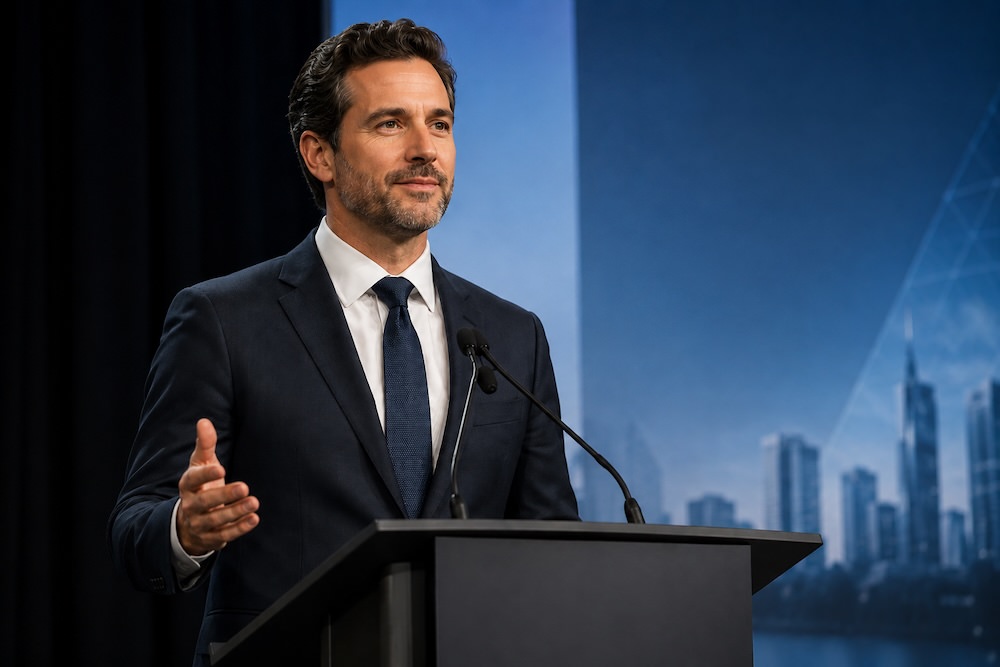
His shoulders remain still. His body moves with intention rather than nervous energy. He looks comfortable holding space. That matters more than most people realise. In high-stakes environments, audiences are not just evaluating the message. They are evaluating the messenger.
And stillness is often read as certainty. The opposite is true as well.
When leaders become unsure, pressure often leaks physically before it appears verbally:
- excessive gesturing
- restless head movement
- shifting posture
- unnecessary movement designed to fill space
Clooney described this perfectly when reflecting on Spielberg’s advice. Early in his career, he realised that uncertainty made him “do too much”. Movement became compensation.
I see the same pattern with senior executives. Most prepare heavily for what they plan to say. Very few prepare for how they will be read when the pressure shifts, when the questioning becomes difficult, or when the room becomes uncertain.
Under pressure, unnecessary movement is rarely interpreted as energy. It is usually interpreted as reduced certainty.
This does not mean becoming robotic or suppressing personality. It means moving with purpose. The leaders who come across most strongly are often the ones who look most comfortable doing less.
Stillness signals that you are not rushing to escape the moment. And in board discussions, investor presentations, analyst Q&A and difficult conversations, that signal carries weight.
One practical exercise:
Over the next week, pay attention to moments where your body becomes more active under pressure. Observe whether the movement is intentional or whether it appears when certainty drops.
Most people never notice the difference. Senior leaders usually do.